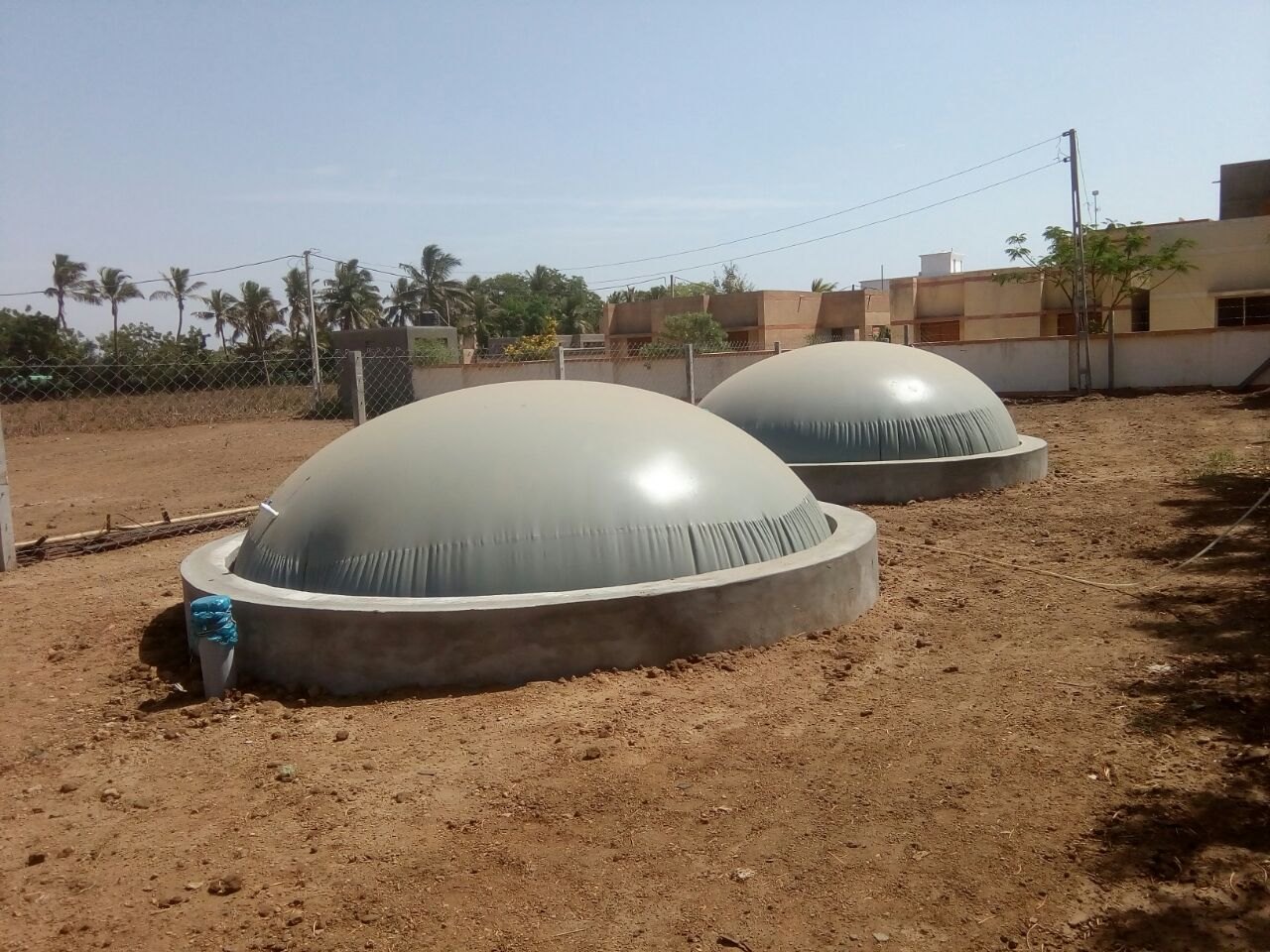
Biogas sanitation transforms organic waste into clean energy and safe sanitation, offering a powerful solution for disaster-affected and remote communities. By converting human and organic residue into methane-rich biogas, these systems reduce reliance on fossil fuels, cut greenhouse gas emissions, and improve public health by managing waste on-site. At Jindongs, we champion biogas sanitation as an eco-efficient way to power heating, cooking, and lighting, all while protecting fragile environments.
To deliver fast, reliable, and sustainable biogas solutions, we integrate state-of-the-art tools at every stage—from design to deployment. Below is our four-step technological workflow:
We employ CAD and computational fluid dynamics (CFD) software to model digester geometry, flow rates, and gas yields. Virtual simulations allow us to optimize tank size, insulation, and mixing mechanisms for local climatic conditions before fabrication begins.
In our factory, we use CNC-cut panels and automated welding robots to manufacture digester chambers and pipe fittings with millimeter accuracy. Factory production ensures airtight seals, uniform wall thickness, and rapid quality control—eliminating on-site fitting errors.
Each unit is equipped with IoT sensors that track temperature, pH levels, and gas pressure in real time. Data is sent to a cloud dashboard, enabling remote diagnostics and automated alerts for maintenance—maximizing uptime and biogas yield.
Digesters, gas storage tanks, and distribution manifolds arrive pre-assembled on skids. Our field teams use quick-lock couplings and color-coded piping to complete installation within hours. Pre-tested electrical and safety modules plug directly into community kitchens or lighting circuits, delivering immediate clean energy.
Effective planning and strategy are essential to implementing biogas sanitation in crisis zones. At Jindongs, we conduct thorough site assessments and resource evaluations, align stakeholders, and develop clear operational roadmaps. This structured approach ensures timely delivery, optimal system performance, and sustainable benefits for affected communities.
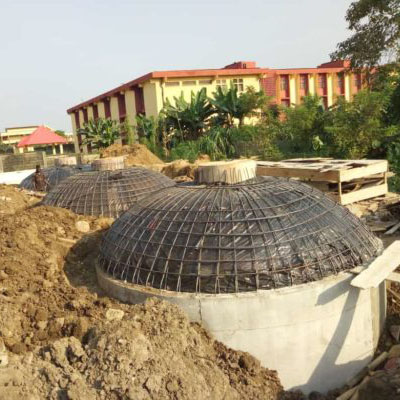
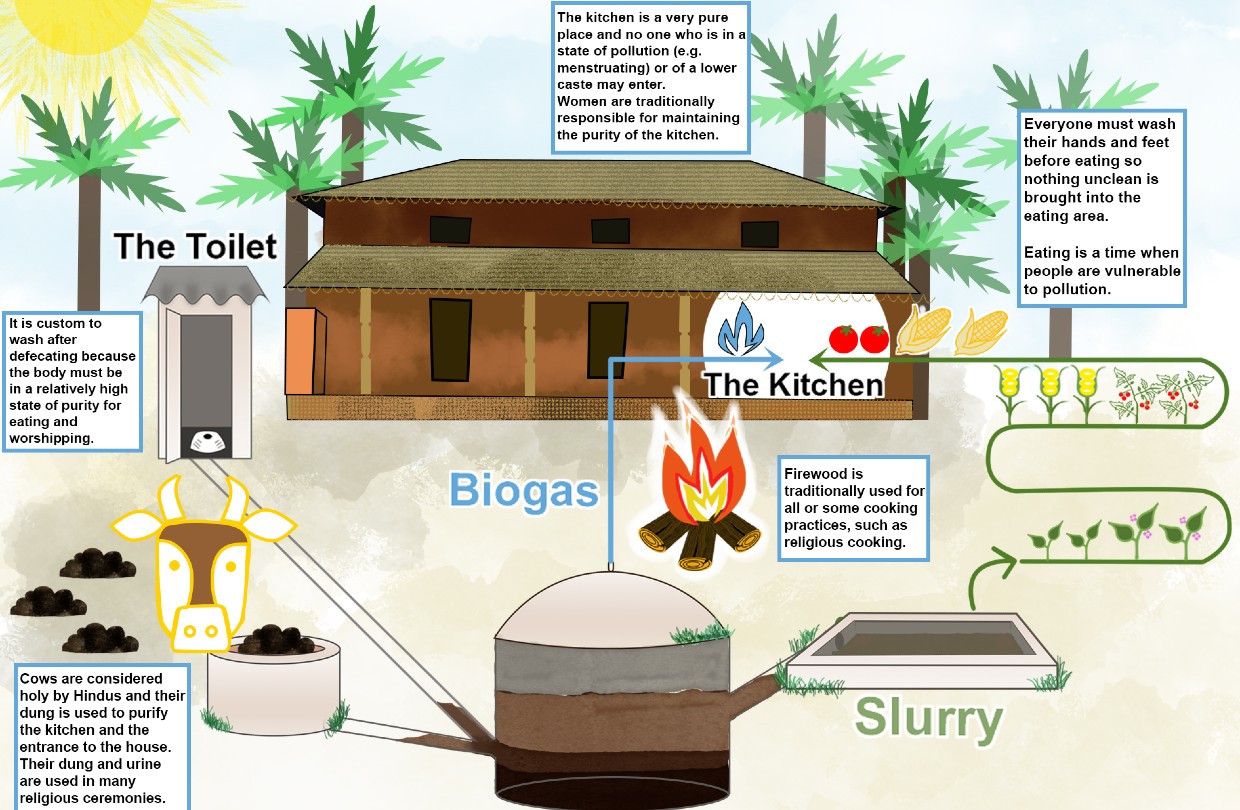
Biogas digesters capture methane (CH₄) produced by organic waste decomposition and use it as clean fuel, preventing its direct release into the atmosphere. This avoids methane and CO₂ emissions from open pits or conventional sewage systems, cutting the carbon footprint of camps by up to 50%.
Our units process food scraps, kitchen waste, human waste (via integrated sanitary interfaces), and light agricultural residues. We partner with relief teams and local communities to collect these materials daily from field kitchens, medical centers, and temporary shelters.
Factory-to-site delivery: 2–4 weeks after finalizing approvals.
Field installation: 1–3 working days for full assembly.
Commissioning: Biogas production begins 7–10 days after initial feedstock loading.
Remote monitoring: Sensors track temperature, pH, and gas pressure, feeding data into our cloud dashboard.
Scheduled servicing: Jindongs conducts preventive maintenance every 3 months and guarantees emergency response within 24 hours.
Local training: We train on-site staff or community volunteers for daily inspections and basic valve replacements.
We supply micro-CHP units that convert biogas into electricity for lighting and device charging. We also connect biogas lines directly to field kitchens and water heaters, and coordinate with water-treatment and sanitation modules to close the environmental loop and minimize solid and liquid waste.
GREEN SMART Fast & Durable Solutions for Humanitarian Response
© All Rights Reserved.
No WhatsApp Number Found!
WhatsApp us